 By Unbug
论文《When Are Parallel Subagents Effective for Coding?》来自 UIUC,实测并行子代理写代码:随机抽题通过率只抬约 1 到 5 个百分点,成本却要付到 2.6 到 3.8 倍,同成本下单 agent 不输。
论文测的对象是仓库构建任务:一个主 agent 要从零做出能通过隐藏测试的程序。实验组 Multi 是主 agent 派生并行子代理(parallel subagents,即把模块拆给多个子代理同时开工),对照组 Single 是单 agent 自己干。每基准抽 30 题、三档难度各 10 题,题目来自 NL2Repo 和 ProgramBench,后者还提供一份可执行的参考程序。驱动框架是 Codex CLI,模型名按论文原样:GPT-5.6 Sol、GPT-6 Sol、GPT-6.1 Sol、Opus 5.5、Grok 4.6、MiniMax-M3。
三笔账:分数、成本、噪声
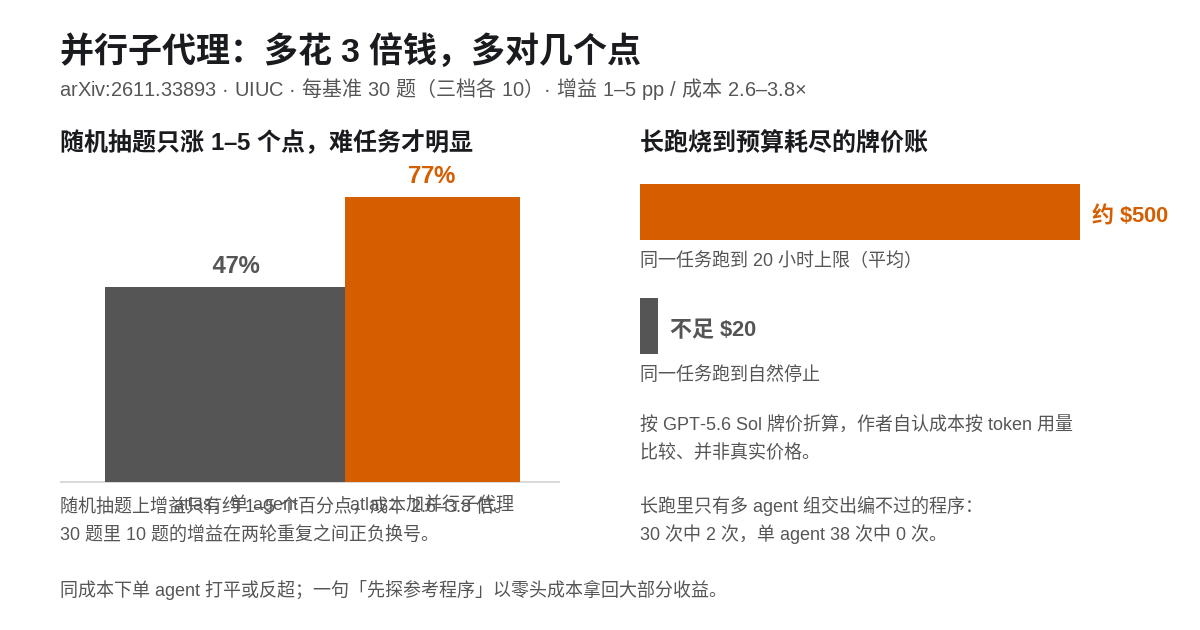
第一笔是提升。「The gain is about 1 to 5 points across model generations and benchmarks, at 2.6 to 3.8 times the cost of a single agent.」跨模型代际和基准,增益停在 1 到 5 个百分点,成本却是单 agent 的 2.6 到 3.8 倍。
第二笔是同成本对照。「At equal cost, Single’s score is higher than or equal to Multi’s.」两边预算拉平后,单 agent 打平或反超。
第三笔是噪声。30 题里有 10 题的增益在两轮重复之间正负换号(「On 10 of the 30 tasks, the gain from subagents even changes sign between two repetitions of the comparison.」),而且「Most comparisons rest on one to three runs per setup.」多数对照每设置只跑 1 到 3 次。所以「1 到 5 个百分点」不能当稳定提升读,它只是小样本里的方向信号。三笔账合读,结论并不复杂:并行子代理买到的不是平均分的抬升,而是难任务上的一次保险。
什么时候真买到了东西
难任务是例外。atlas 是 ProgramBench 上重建数据库 schema 工具的难题:「On atlas, a hard ProgramBench task that rebuilds a database schema tool, a single GPT-5.6 Sol agent stops at 47% of the hidden tests, whereas with subagents it reaches 77%.」单 agent GPT-5.6 Sol 停在 47%,加子代理到 77%。
机制上买到的主要是「替主 agent 补自检」,因为开关很轻:「in Codex and Claude Code a user enables subagents with one sentence and pays the extra cost whether or not the program improves.」——一句话开启,账单跟程序有没有变好无关。摘要口径显示,从 GPT-5.6 Sol 到 GPT-6.1 Sol,增益随单 agent 自检变强而缩小。对单 agent 加一句「先跑一遍参考程序」,作者测得它「recovers most of this gain at a fraction of the cost」——大部分收益能用零头成本换回来。作者把机制归到三处:子代理替主 agent 补上了它跳过的自检;新开会话带来干净上下文,长跑早期进度更快;多代理产出更模块化,文件更多、函数更短,更接近上游源码。作者还在 Claude Code 上用 Opus 5.5 做了小规模复现(每设置每题一跑、每基准十道随机题),观察到类似模式。
长跑里还有一处翻车点:跑到预算耗尽时,「only multi-agent runs end with a program that does not build (2 of 30 extended runs, against none of 38 single-agent ones)」——只有多 agent 组交编不过的程序,30 次里 2 次,单 agent 38 次里 0 次。「GPT-5.6 Sol costs about $500 at list price on average, compared with under $20 for a run to the natural stop.」同一任务跑到 20 小时上限平均约 $500 牌价,自然停止不足 $20。
这份测量自己承认的边界
每设置 1 到 3 跑、30 题中 10 题增益换号,意味着「1 到 5 个百分点」是噪声量级的方向差。数字要连着局限读:作者自认「so their cost figures compare token use rather than price」:成本按 token 用量折算牌价,不是真实账单。仓库口径也要写清:abs 页挂了 github.com/cogito233/subagent-study 的链接,发稿前实测(2026-11-27)该地址返回 404,本文不写「已开源」。此外这是单一实验室(UIUC 三人)、主跑单一 harness(Codex CLI)的结果,外推宜谨慎。
它和站内《子 agent 别写总结,直接交证据》接上:那篇测「派子代理时怎么传话更省钱」(回传原始证据比改写总结省 43.3% token),这一篇测「值不值得派」。与《标价之外,Harness 替你买了什么》成对照:那期量 harness 记在账外的开销,这一篇量用户主动开启的开销。


 AI 智创简报:《一周两记配额重锤,用量账房成了新活计》